Rummy variations
By The Atlas Carta teamUpdated on ✓ Rules checked in the app
Play Rummy online
The app’s three variants
| Simple | Rummy 51 (Talaj 51) | Rummy 71 (Talaj 71) | |
|---|---|---|---|
| Pack | 106 cards (2 jokers) | 108 cards (4 jokers) | 106 cards (2 jokers) |
| Cards in hand | 13 · dealer 14 | 14 · dealer 15 | 14 · dealer 15 |
| Deal | 3, then 2 at a time | 2 at a time | 2 at a time |
| Laying down | All at once, to go out | Opening, then free melds | Opening, then free melds |
| Requirement | A run (8♠ 9♠ 10♠) and a set (6♠ 6♥ 6♣) | 51 points, nothing else | 71 points, run (3♣ 4♣ 5♣) and set (4♠ 4♥ 4♦) without jokers |
| Joker | Allowed everywhere | Worth the card it replaces | Outside the 71, laid on top |
| Discard pile | Free to take | Taken to lay down that turn | Taken to lay down that turn |
| Tournante | Yes | Yes | Yes |
| Adding to others’ melds | No | Yes | Yes |
| Loser’s penalty | A fixed 100 (200 for the team in 2 vs 2) | Cards in hand, 100 if nothing laid down | Cards in hand, 100 if nothing laid down |
Simple rummy
Melds stay hidden in your hand until you go out: you lay down everything but one card, with at least one Suivi or run (2♠ 3♠ 4♠) and one Tria or set (Q♠ Q♥ Q♦), then discard the last card. The tournante exists here too, and scoring is fixed: each loser takes 100 points, whatever their cards. Ideal for beginners. → Simple rummy rules
Rummy 51 (Talaj 51)
Your first lay-down must be worth at least 51 points, with no required meld, and the joker is worth the card it replaces. After that you lay down and build on the whole table. The threshold rises: opponents must make the first opening’s total + 1. → Rummy 51 rules
Rummy 71 (Talaj 71)
To open: 71 points, a run (5♥ 6♥ 7♥) and a set (4♠ 4♥ 4♦), no jokers. Jokers can be laid on top and raise the bar for your opponents. The most tactical version. → Rummy 71 rules
Two formats: 1 vs 1 or 2 vs 2
| 1 vs 1 | 2 vs 2 | |
|---|---|---|
| Players | 2, face to face | 4, partners opposite each other |
| Who pays | The loser (100 in Simple, their hand in Rummy 51 and 71) | The opposing team: 200 in Simple, both hands in Rummy 51 and 71 |
| Partner of an opened player | — | Lays down with no threshold (Rummy 71: with a run (6♦ 7♦ 8♦) without a joker, the app’s current rule) |
| Game lost at | 300 points in Simple or 251 in Rummy 51 and 71 | 600 points in Simple, 351 in Rummy 51 or 451 in Rummy 71 |
2 vs 2 is the app’s big specialty: few online rummy games offer it. All its rules are in partners rummy.
What never changes, whatever the variant
Before comparing, it helps to know what the three variants share. The melds are the same everywhere: the Suivi or run (4♠ 5♠ 6♠), at least three cards in sequence in one suit, and the Tria or set (8♠ 8♥ 8♦), three or four cards of the same rank in all different suits. The Ace goes low (A-2-3) or high (Q-K-A), never both: K-A-2 is refused. One joker per meld, and a discarded joker is never taken back.
- The rhythm of a turn: one draw (stock or discard pile), lay-downs if the variant allows them, one discard.
- The dealer gets one extra card and plays their first turn without drawing.
- The first round of turns: nobody lays anything down until play returns to the dealer.
- The tournante: the dealer’s first discard is set aside; during that first round, everyone may take it instead of drawing. A joker is never the tournante.
- The last card: with a single card in hand, you draw from the stock, taking neither the discard pile nor the tournante.
- The closing card: you always keep at least one card, and discarding it is how you win the round.
- Empty stock: the discard pile, except its top card, is shuffled and becomes the new stock.
Switching variants doesn’t mean relearning everything: only the way you lay down (all at once or turn by turn), the opening requirement and the penalty scale change. All the shared details are in the complete rummy rules.
Simple or Rummy 51/71: two ways of thinking about a round
The real divide is not between 51 and 71, but between Simple and the two opening variants (also called Talaj). In Simple the table stays empty until the end: you see nothing of your opponents’ hands, you can’t build on anyone’s melds, and the round is a pure race. In Rummy 51 and 71 the table fills up bit by bit: every lay-down reveals part of your hand, and every meld on the table becomes a place where everyone can add cards, opponents included.
| Question | Simple | Rummy 51 and Rummy 71 |
|---|---|---|
| What do you see of your opponents’ hands? | Nothing, until they go out | Their lay-downs, turn by turn |
| Can you take the discard? | Yes, freely | Only to lay that card down the same turn |
| When is the joker useful? | Everywhere, no conditions | Rummy 51: from the opening; Rummy 71: on top of the 71 points |
| What does a lost round cost? | 100 per loser, always | From a few points to over 100, depending on the hand |
| What matters most | Speed | Speed and the weight of the cards you keep |
This difference in scoring changes everything. In Simple, keeping a King or a joker in hand costs nothing extra: a loser takes 100 points, whether they hold two small cards or thirteen big ones. In Rummy 51 and 71, on the other hand, every card counts (face cards 10, Ace 11, joker 20) and a player who has laid nothing down takes a flat 100. Details on the rummy scoring page.
One hand, three variants
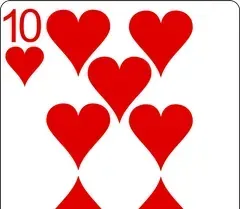
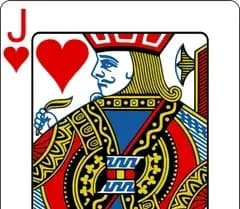
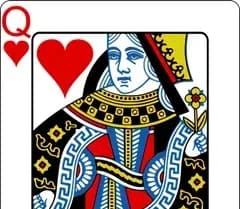
To really feel the difference, take one hand after the draw and see what it allows in each variant. It holds a run (10♥ J♥ Q♥ K♥), a set (7♠ 7♥ 7♦), a run with a joker (4♣ joker 6♣) and a few loose cards.
 10 of hearts
 Jack of hearts
 Queen of hearts
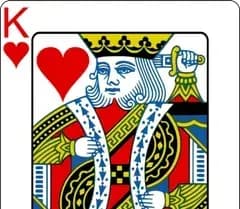 King of hearts
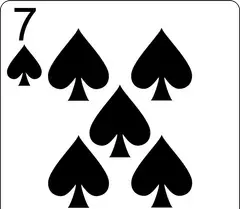 7 of spades
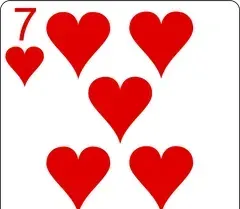 7 of hearts
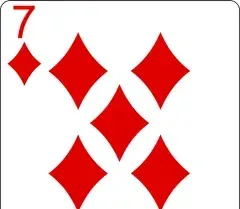 7 of diamonds
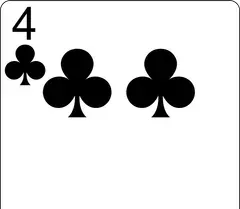 4 of clubs
- JOKERJoker
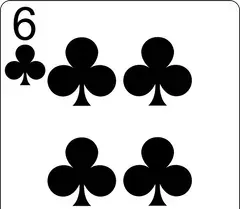 6 of clubs
- In Rummy 51: 40 + 21 = 61, so the opening already works without the joker. With the run (4♣ joker 6♣), where the joker stands for the 5♣, the total climbs to 76: the opposing team will then have to open with at least 77.
- In Rummy 71: only melds without a joker count toward the 71 points. Here 40 + 21 = 61: 10 points short. The run (4♣ joker 6♣) cannot close the gap. You have to wait for another joker-free meld, for instance a set (5♠ 5♥ 5♦) that would make 76.
- In Simple: points don’t matter. You must arrange all your cards but one into melds, with at least one run (10♥ J♥ Q♥ K♥) and one set (7♠ 7♥ 7♦): until the loose cards find a home, you cannot go out.
The same hand is therefore ready in Rummy 51, almost ready in Rummy 71 and still far off in Simple. You can redo the exercise with your own cards using the opening calculator.
Rummy 51 or Rummy 71: what changes at the table
On paper, 20 points separate the two variants. At the table the gap is much wider. In Rummy 51, with 4 jokers in the pack and jokers counting from the opening, players often open early; the round is then decided by add-ons and the race to the last card. In Rummy 71, with only 2 jokers, which fill neither the 71 points nor the required melds, opening is a real goal: you need a run (6♠ 7♠ 8♠) and a set (Q♠ Q♥ Q♣) without jokers, and 71 points without jokers.
- The discard pile: in both variants, a card taken from the discard pile must be laid down that turn. In Rummy 71, to open with it you also need a run (3♠ 4♠ 5♠) built without that card: taking the 8♥ to finish a run (6♥ 7♥ 8♥) is not enough to open if it is your only run (6♥ 7♥ 8♥).
- The rising threshold: in both, the opposing team must open with at least the first opening’s total + 1. In Rummy 71, melds with jokers laid on top push that total up.
- The partner (2 vs 2): in Rummy 51 they lay down freely as soon as their partner has opened; in Rummy 71 they need a run (5♥ 6♥ 7♥) without a joker (the app’s current rule).
- Laying everything down to go out: in both, you may lay down all your cards but one even below the threshold, but in Rummy 71 the make-up is still required (run (8♠ 9♠ 10♠) and set (9♠ 9♥ 9♦) without jokers, plus a run (2♣ 3♣ 4♣) built yourself if the card came from the discard pile).
In short: Rummy 51 rewards speed and opportunism, Rummy 71 rewards patience and calculation. The two detailed pages: Rummy 51 and Rummy 71.
Which variant should you choose?
- New to rummy → Simple: one single goal, a complete hand.
- You know Rummy 51 from home → Rummy 51: you’ll feel at home, with a few differences (no mandatory pure run, a rising threshold).
- You like to calculate and wait for the right moment → Rummy 71.
- You’re playing with a friend → any variant in 2 vs 2, so you’re on the same team.
- You want a shorter game → 1 vs 1: it ends at 300 points in Simple or 251 in Rummy 51 and 71 instead of 600 points in Simple, 351 in Rummy 51 or 451 in Rummy 71.
House rules you’ll come across elsewhere
Rummy is handed down from table to table, and every family has its habits. If you learned elsewhere, you will probably meet one of these rules. They do not apply in the Atlas Carta app, but knowing them avoids plenty of arguments.
| Elsewhere, people sometimes play… | In the Atlas Carta app |
|---|---|
| Opening at 51 with a mandatory “pure run” (no joker) | Rummy 51: no required meld; it is Rummy 71 that requires a run (8♠ 9♠ 10♠) and a set (9♠ 9♥ 9♦) without jokers |
| Joker counted as 0, or as 25 to 30 points | Rummy 51: worth the card it replaces; Rummy 71: not counted toward the 71 |
| The same fixed threshold for everyone | The threshold rises: first opening + 1 for the opposing team |
| Going rummy doubles the points | Allowed, with no doubling |
| An Ace linking King and 2 (K-A-2) | Not allowed |
| Two jokers in the same meld | One joker per meld |
| Every player for themselves only | 1 vs 1 or 2 vs 2, partners opposite each other |
| A fixed number of rounds | Lost at 600 points in Simple, 351 in Rummy 51 or 451 in Rummy 71 (2 vs 2) or 300 points in Simple or 251 in Rummy 51 and 71 (1 vs 1) |
The beauty of an app is that these debates disappear: the game engine applies the same rule to everyone, every game.
Rummy’s relatives around the world
The games below belong to the same family (draw, form runs and groups, get rid of your cards), but their rules differ. They are not offered in the Atlas Carta app; they are listed to help you find your way around.
| Game | Equipment | What sets it apart |
|---|---|---|
| Gin Rummy | 1 × 52 cards, 2 players | 10 cards; nothing is laid down during play, you “knock” when your unmatched cards are worth little |
| Rummy 500 | 1 × 52 cards | Melds you lay down score points; game to 500 |
| Kalooki | 2 decks + jokers | Opening with a minimum score (often 40) |
| Rummikub | 106 numbered tiles (including 2 jokers) | 14 tiles, opening of 30, the whole table can be rearranged |
| Chinchón | Spanish deck | 7 cards; a 7-card run (the “chinchón”) wins the game outright |
| Carioca | 2 decks + jokers | Each round imposes its own melds (contracts) |
| La 51 (la bajada) | 2 decks + jokers | You must “bajar” with 51 points: the same idea as our Rummy 51 |
| 13-card rummy | 2 decks + jokers | 13 cards; a pure run without a joker is required |
| Hand / Hand Partner | 2 decks + jokers | Opening-threshold rummy with a team version |
| Okey | Tiles | A tile-based relative played by four, with a joker indicator |
A little history
Card-game historians often trace the rummy family back to conquian, a game of runs and groups played with the 40-card Spanish deck in the 19th century. The name “rummy” appears in English in the early 20th century, and the game then spread everywhere, branching out into dozens of variants: Gin Rummy, Kalooki, Rummy 500, Chinchón… Other theories point to even older games. For a detailed history, Wikipedia’s rummy article and the reference site pagat.com are good places to start.
The app’s three variants — Simple, Rummy 51 and Rummy 71 — belong to these rules handed down from table to table. We fixed them once and for all, and the game engine enforces them.
Play Rummy online
Frequently asked questions
Which rummy variants does the Atlas Carta app offer?
Three: Simple rummy (lay everything down at once), Rummy 51 (open with 51 points) and Rummy 71 (71 points, with a run (5♥ 6♥ 7♥) and a set (7♠ 7♥ 7♣) without jokers). Each is played 1 vs 1 or 2 vs 2.
What is the difference between Rummy 51 and Rummy 71?
Rummy 71 requires 71 points instead of 51, requires a run (3♣ 4♣ 5♣) and a set (6♠ 6♥ 6♣), and does not count jokers toward the opening. It uses 2 jokers instead of 4.
Is rummy the same as Gin Rummy?
No. Gin Rummy is a two-player game with one deck and 10 cards, where nothing is laid down during play. The app’s rummy uses two decks and jokers, and (except in Simple) melds are laid down as the turns go by.
Which rummy variant is best for beginners?
Simple rummy: you just need to arrange your whole hand into melds, with at least one run (5♥ 6♥ 7♥) and one set (4♠ 4♥ 4♦). Then move on to Rummy 51.
Is there a tournante in Simple rummy?
Yes: the tournante exists in all three variants. The dealer’s first discard can be taken instead of drawing during the first round of turns; a joker is never the tournante.
What does a lost round cost in each variant?
In Simple, a fixed 100 points per loser (200 for the team in 2 vs 2). In Rummy 51 and 71, the value of the cards left in hand (face cards 10, Ace 11, joker 20), or 100 for a player who has laid nothing down.
Read also
Other games on Atlas
- ToutiTrick-taking and bidding card game (bids from 70 to 230) for 4 players in 2 teams, played with a 40-card Spanish deck; the first team to 600 points wins.
- RondaCapturing card game with a 40-card Spanish deck, for 2 players or 4 in teams of 2; the first side to 33 points wins.
- BeloteTrick-taking game with trumps and declarations, for 4 players in 2 teams of 2. Moroccan variant with 32 Spanish cards to 1,000 points, or French variant with 32 French-suited cards to 1,000 points.
Play Rummy online
On iOS and Android, play all four games online and invite your friends to a private table.