Rummy vs Rummikub: the real differences
By The Atlas Carta teamUpdated on ✓ Rules checked in the app
Play Rummy online
Cousins in the rummy family
Rummy is a classic card game played in countless forms around the world. Rummikub is a later tile-based relative: instead of holding cards, each player keeps tiles on a rack. The shared core is easy to spot — group cards (or tiles) of the same rank, line up consecutive ones of the same suit, and get rid of everything before your opponents.
In the Atlas Carta app, a run is called a Suivi (7♥ 8♥ 9♥) and a set a Tria (9♠ 9♥ 9♦). Different words, same shapes. What really separates the two games is how the table works and how points are counted.
Rummy and Rummikub side by side
| Rule | Rummy (Atlas Carta app) | Rummikub |
|---|---|---|
| Equipment | 2 decks of 52 cards + 2 jokers (4 in Rummy 51) | 106 tiles: 1 to 13 in 4 colours, twice, + 2 jokers |
| Starting hand | 13 (14 for the dealer) in Simple; 14 (15 for the dealer) in Rummy 51 and 71 | 14 tiles |
| Runs | Suivi (5♣ 6♣ 7♣): 3+ consecutive cards of one suit; ace low or high, never K-A-2 | 3+ consecutive tiles of one colour |
| Sets | Tria (J♠ J♥ J♦): 3 or 4 cards of one rank, all suits different | 3 or 4 tiles of one number, different colours |
| Joker | One per meld; swapped only for the exact card; a discarded joker can never be picked up | Stands for any tile; can be freed by rearranging the table |
| A turn | Draw 1 card (stock or discard), lay down, discard 1 card | Play tiles; if you can’t or won’t, draw a tile |
| Discard pile | Yes | No |
| First lay-down | Simple: everything at once; Rummy 51: 51+ points; Rummy 71: 71+ points without jokers, with a run (8♠ 9♠ 10♠) and a set (Q♠ Q♥ Q♦) | Usually 30+ points from your own tiles |
| Table | Melds are never broken up: you add cards to them | Every meld can be split and rebuilt |
| Scoring | Penalty points for cards left in hand (only the side that did not go out pays) | Losers count the value of tiles left on their rack |
| End of game | Lost at 600 points in Simple, 351 in Rummy 51 or 451 in Rummy 71 (2 vs 2) or 300 points in Simple or 251 in Rummy 51 and 71 (1 vs 1) | Depends on the agreed rules (rounds or score) |
| Teams | Yes: 2 vs 2, partners sitting opposite | Every player for themselves |
What makes rummy different
The discard pile: reading your opponents
Every rummy turn ends with a card thrown face up. That pile tells a story: what an opponent throws away is what they don’t need, and what they pick up is what they are building. Rummikub has no discard pile, so this layer of reading and bluffing simply does not exist.
In the Atlas Carta app, the pick-up rule depends on the variant. In Simple you may take the top discard freely; in Rummy 51 and 71, only to lay it down in the same turn. A card you take can never be discarded again on that turn.
Three very different openings
Rummikub has one opening rule. The Atlas Carta app has three variants. In [Simple rummy](/rami/rami-simple) nobody lays anything down during the round: you keep your melds hidden and go out in one go with at least one run (5♥ 6♥ 7♥) and one set (8♠ 8♥ 8♣). In [Rummy 51](/rami/rami-51) your first lay-down must reach 51 points, with no required meld, and a joker is worth the card it replaces. In [Rummy 71](/rami/rami-71) you need 71 points without jokers, including a Suivi (8♠ 9♠ 10♠) and a Tria (6♠ 6♥ 6♣).
There is a twist: in Rummy 51 and 71, the threshold rises. Once one side has opened, the other side must beat that total by at least one point. If your opponent opens with 63, you need 64.
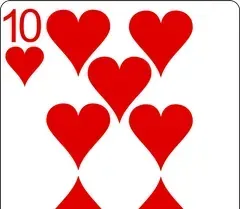 10 of hearts
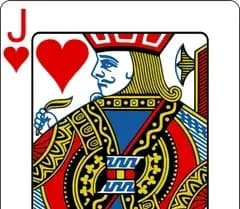 Jack of hearts
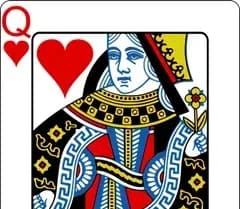 Queen of hearts
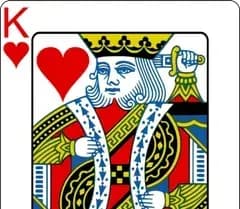 King of hearts
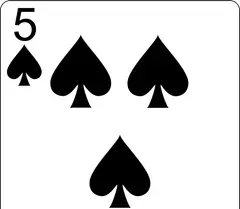 5 of spades
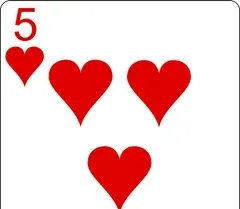 5 of hearts
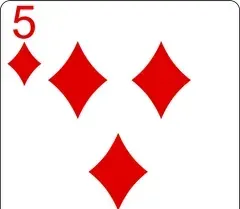 5 of diamonds
Partners rummy
Rummikub is an every-player-for-themselves game. Rummy in the Atlas Carta app can be played 1 vs 1 or 2 vs 2, partners sitting opposite. As soon as one partner has opened, the other may lay down with no threshold (in Rummy 71, as long as the lay-down includes a run such as 3♣ 4♣ 5♣), and both can add to every meld on the table. When one partner goes out, the whole team wins the round. See partners rummy for the full rules.
Scoring by penalties
In rummy you try to collect as few points as possible. In Simple, each losing player takes a flat 100 points (200 for the team in 2 vs 2). In Rummy 51 and 71 you pay for the cards left in your hand: 2 to 10 at face value, picture cards 10, aces 11, jokers 20 — and a flat 100 if you never laid anything down. All values are on the rummy scoring page, with a free calculator.
What makes Rummikub different
Rummikub’s signature idea is table manipulation. After your initial meld (30 points from your own rack), you may split runs, borrow tiles from sets and rebuild everything, as long as every combination on the table is valid when your turn ends. It is a visual puzzle game that rewards patience, and it is very popular as a family board game.
There is also no discard: if you cannot or do not want to play, you draw a tile from the pool and your turn ends. The game is usually played by 2 to 4 people.
The key difference: melds on the table
In Rummikub, the table is a shared workshop you reshape every turn. In rummy, a meld on the table is final: you can only add cards to it or swap its joker for the exact card it stands for. In a run (6♦ joker 8♦), only the 7♦ frees the joker.
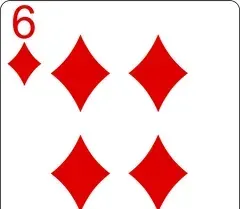 6 of diamonds
- JOKERJoker
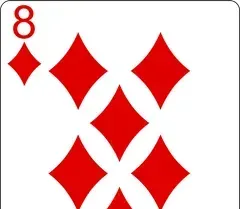 8 of diamonds
So rummy strategy is mostly about your hand and when you lay down, while Rummikub strategy is about the table. In Rummy 51 and 71, adding a card to an opponent’s meld is allowed — and often the fastest way to go out.
Which one should you play?
- You love long, quiet puzzles on an open table: Rummikub is your game.
- You enjoy reading opponents, bluffing with your discards and playing with a partner: rummy is for you.
- You are new to rummy: start with Simple rummy, then move on to Rummy 51.
- You want a challenge: Rummy 71, with its joker-free opening, is the toughest.
Good Rummikub players spot runs (4♠ 5♠ 6♠) and sets (K♠ K♥ K♦) at a glance, so the jump to rummy is easy. Start with the complete rummy rules and keep the rummy glossary close.
Play Rummy online
Frequently asked questions
Is Rummikub a type of rummy?
Yes, it belongs to the rummy family: it keeps runs and sets but uses numbered tiles and lets you rearrange the whole table.
Can you play Rummikub with cards?
You can imitate it with two 52-card decks, but it is no longer quite the same game. With cards, the classic form is rummy, with its discard pile.
How many points do you need to open?
Usually 30 in Rummikub. In the Atlas Carta app: no threshold in Simple (you go out at once with a run (5♥ 6♥ 7♥) and a set (4♠ 4♥ 4♦)), 51 in Rummy 51, and 71 without jokers in Rummy 71.
Can you change other players’ melds in rummy?
You cannot break them up, but in Rummy 51 and 71, once you have opened, you may add cards to any meld and swap a joker for the exact card it replaces.
Can rummy be played in teams?
Yes. In the Atlas Carta app rummy is played 1 vs 1 or 2 vs 2, partners sitting opposite; the team that reaches 600 points in Simple, 351 in Rummy 51 or 451 in Rummy 71 penalty points loses.
Is Rummikub in the Atlas Carta app?
No. The app offers card rummy (Simple, 51 and 71), plus Touti, Ronda and Belote.
Read also
Other games on Atlas
- ToutiTrick-taking and bidding card game (bids from 70 to 230) for 4 players in 2 teams, played with a 40-card Spanish deck; the first team to 600 points wins.
- RondaCapturing card game with a 40-card Spanish deck, for 2 players or 4 in teams of 2; the first side to 33 points wins.
- BeloteTrick-taking game with trumps and declarations, for 4 players in 2 teams of 2. Moroccan variant with 32 Spanish cards to 1,000 points, or French variant with 32 French-suited cards to 1,000 points.
Play Rummy online
On iOS and Android, play all four games online and invite your friends to a private table.